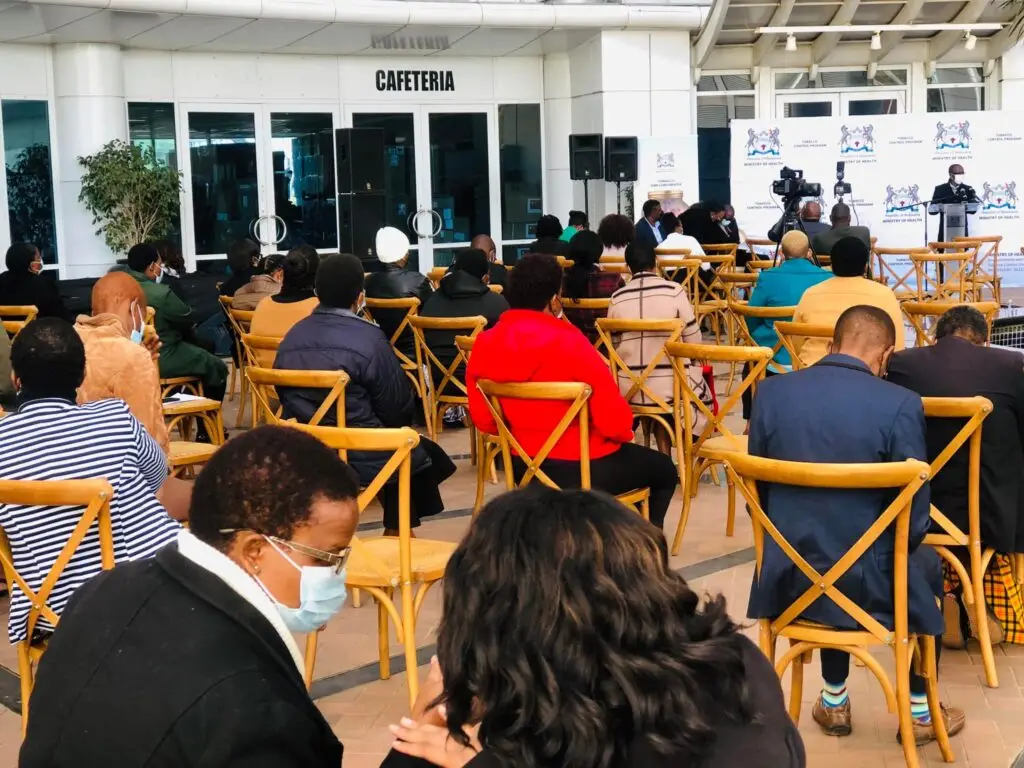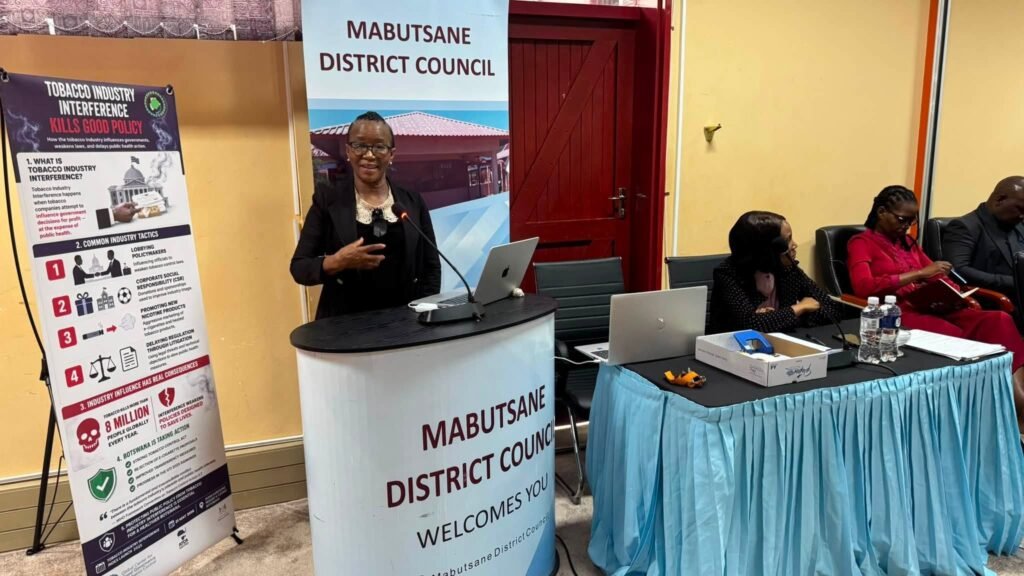

Anti Tobacco Network (ATN) has intensified efforts to secure the implementation of Botswana’s Tobacco Control Act, 2021, bringing together stakeholders from government, Parliament, local authorities, civil society, business, and communities to identify key decision-makers and strategies for accelerating the signing of the regulations.
The Stakeholder Analysis and Mapping Workshop provided a platform to examine progress made in engaging local authorities, share concerns raised by councillors across the country, and develop a coordinated approach towards securing the regulations needed to operationalise the Act.
In her opening remarks, ATN Board Chairperson Dr Keneilwe Mmopi highlighted the gap between the passage of the Tobacco Control Act in 2021 and the outstanding regulations required to give practical effect to many of its provisions.
“In 2021, Botswana passed the Tobacco Control Act. It was a proud moment. But more than five years later, the regulations that make the Act work in practice have still not been signed. Without them, many of the protections in the Act cannot be enforced,” she said.
Dr Mmopi explained that ATN had engaged 17 of Botswana’s 31 councils, where councillors repeatedly called for the regulations to be signed, stronger protection for children and practical tools to enable local authorities to address tobacco-related concerns.
She noted that ATN had also received encouraging indications that the Minister of Health and the Assistant Minister of Health were committed to advancing the process, adding that the network stood ready to support efforts towards implementation.
Dr Mmopi said the workshop was convened to identify stakeholders with the influence, knowledge and capacity to help move the process forward and establish effective ways of engaging them.
She emphasised that the initiative centred on protecting public health and was guided by Article 5.3 of the World Health Organization Framework Convention on Tobacco Control (WHO FCTC), which seeks to protect public health policies from the commercial and other vested interests of the tobacco industry.
Councillors call for urgent action
Presenting findings from ATN’s engagement with full councils, the network’s Executive Director, Professor Bontle Mbongwe shared concerns and recommendations raised by local leaders during presentations on the health risks associated with tobacco and nicotine products and the urgent need to operationalise the Tobacco Control Act.
The engagements form part of the Clean Air Botswana Project: Fast-Tracking the Regulations, through which ATN is mobilising support among local authorities and other stakeholders to push for the signing and gazetting of the regulations.
According to the report presented by Professor Mbongwe, councillors from several districts questioned why the regulations remained unsigned and called for urgent action.
A recurring concern was the impact of tobacco use on children and young people. Councillors highlighted how smoking and snuff use by parents can normalise tobacco consumption in the home, while reports of children carrying tobacco in school bags, vaping among school-aged boys and girls, and children as young as 13 years old smoking stressed the need for stronger prevention measures.
Local leaders also raised concerns about the widespread use of products beyond conventional cigarettes, including snuff, lengwanda, hubbly bubbly, and e-cigarettes or vapes. Some products were reportedly perceived as harmless, while their accessibility and affordability made them especially troubling.
The discussions also highlighted the need to enforce smoke-free environments effectively. Councillors in Gaborone, for example, reported smoking in restaurants at Airport Junction Mall and the use of hubbly bubbly in designated non-smoking areas. They called for regulations that would empower licensing officers to take appropriate action against businesses that fail to comply with smoke-free requirements.
Taxation also emerged as an important issue. Some councillors proposed higher tobacco taxes or levies, citing the financial burden tobacco-related illnesses place on the government and the need to strengthen tobacco prevention measures.
However, the report also identified political will as a potential obstacle. A councillor in Ghanzi suggested that some politicians might be reluctant to support stronger tobacco control measures for fear of losing voter support.
Local leaders share personal experiences
Contributions from councillors illustrated how social norms, product appeal and limited awareness can influence tobacco use.
Tlokweng Councillor Joseph Moakofi highlighted the influence of parental behaviour on children’s perceptions of tobacco use.
“Because children see it being used, they don’t see it as a problem and end up using it,” he said.
In Bobirwa, Councillor Afa Moalosi spoke about the appeal of flavoured and scented tobacco products, sharing his personal experience with hubbly bubbly.
“I do not smoke cigarettes, but I was attracted by the nice smell of hubbly bubbly, and I ended up taking part,” he said.
Meanwhile, Kweneng Deputy Chairperson Kenna Odirile called for greater investment in tobacco control and increased taxation of the industry.
“The government is financially broke right now. I think where we are now, we need to put more effort into tobacco control and increase how much we tax the industry,” he said.
These contributions reinforced the need for public education that addresses not only the health consequences of tobacco use but also the social influences, marketing appeal and misconceptions that can encourage experimentation, particularly among young people.
Councils ready to support community action
Despite concerns raised, the report highlighted willingness among local authorities to work with ATN in expanding tobacco awareness and prevention initiatives.
Most councils expressed readiness to take the message to their communities through Kgotla meetings, schools, public gatherings and theatre-based activities.
The engagement also revealed that some councillors wanted more explanation on the broader tobacco control agenda. In Good Hope, questions included why tobacco was not banned outright, what support was available to people experiencing nicotine dependence, whether tobacco control could negatively affect the economy, and why public discussions focused primarily on the dangers of tobacco.
These questions highlighted the importance of comprehensive public education that combines awareness of health risks with information on quitting support, nicotine dependence and the wider social and economic costs of tobacco use.
Evidence points out the urgency
The workshop was informed by national data illustrating the scale of tobacco and nicotine use in Botswana.
According to the 2024 Botswana STEPS survey, 22.2% of adults use tobacco, including 37.2% of men. The 2024 Global School-based Student Health Survey also found that 12% of students aged 13–17 use tobacco, while 11.1% use e-cigarettes.
The findings underline the importance of strengthening prevention measures and protecting young people from exposure to tobacco and nicotine products.
Professor Mbongwe emphasised that the immediate goal was to secure the regulations as soon as possible, translating the concerns and recommendations expressed by local leaders into tangible progress.
The Stakeholder Analysis and Mapping Workshop therefore marked an important step towards coordinating advocacy efforts, identifying influential decision-makers and strengthening collaboration across sectors.
For ATN, the message emerging from the councils is clear: local leaders are calling for action to protect public health, especially children, strengthen enforcement, improve public awareness and ensure that Botswana’s tobacco control legislation can deliver on its intended public health protections.
The next step is to turn these calls into coordinated action and help ensure that the regulations are signed, gazetted and implemented without further delay.